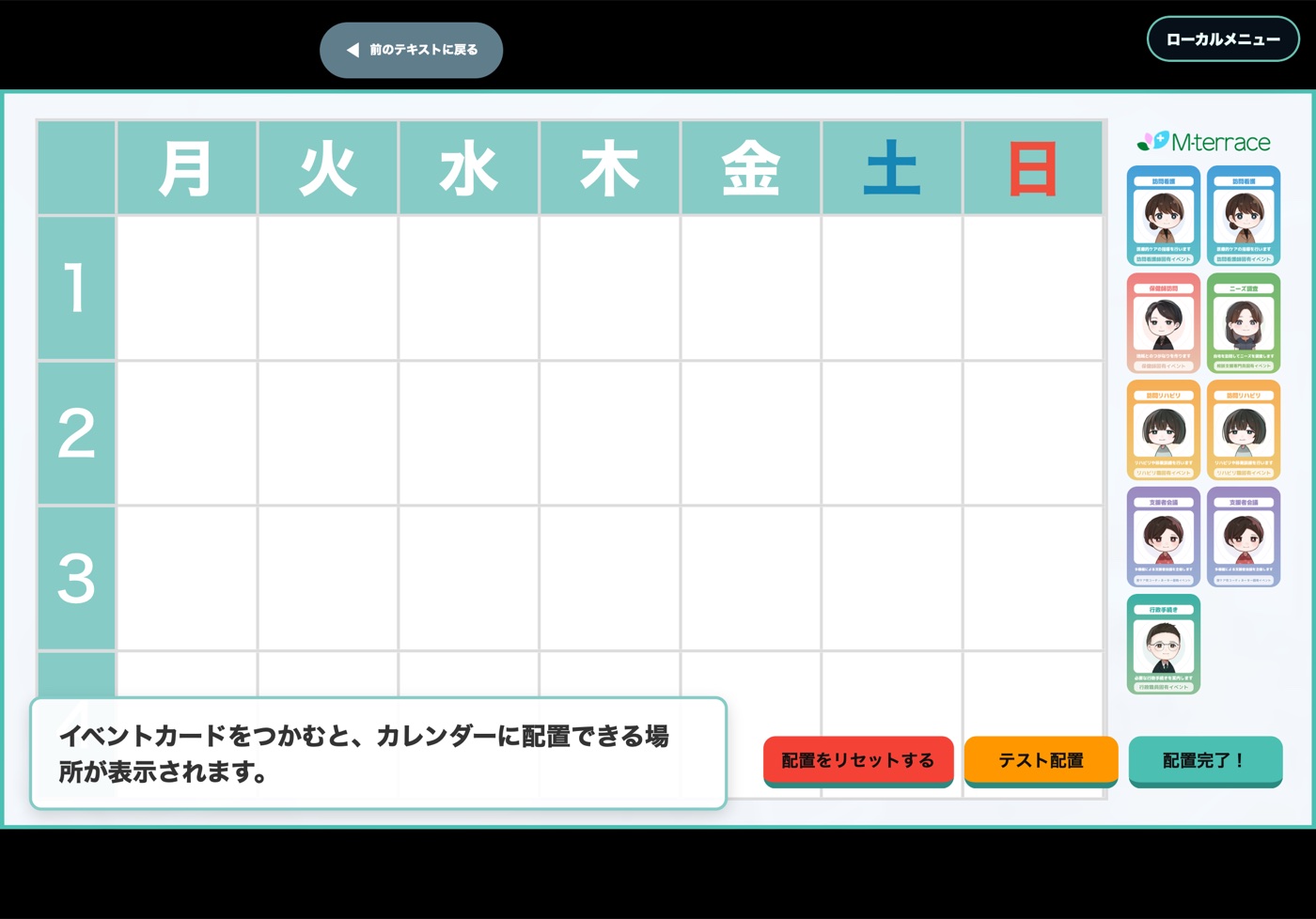
Planning everyday life
Build a monthly schedule
Arrange family commitments and support activities to plan a manageable month.
Game-Based Learning Content for Healthcare and Welfare

A team-based workshop using digital games and board activities to explore family life and interprofessional collaboration.
Our official video offers a glimpse of the workshop and shows how teams discuss and explore a family's everyday life.
For children with ongoing medical care needs and their families, everyday life brings together hospital visits, household tasks, siblings, work, rest and connections with the community.
Participants become a support team, using schedules, events, tokens and mini-games to identify changes in the family's daily life.
They learn to recognise subtle concerns as signs that support may be needed.
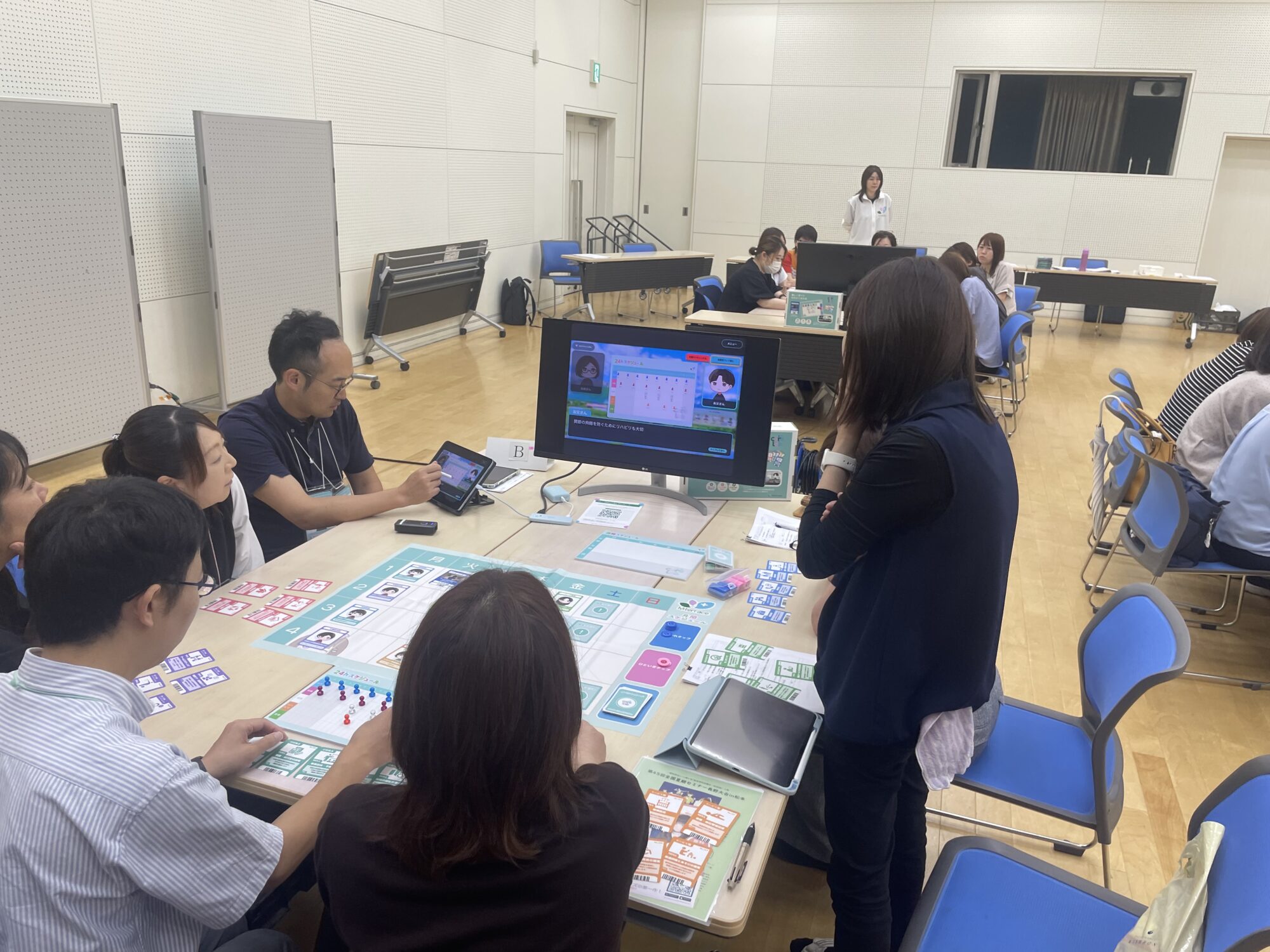
Meet the family through an introductory video, then agree on your team's goals and roles.
Build monthly, 24-hour and weekly schedules to understand the rhythm of the family's life.
Work together to respond to everyday events, such as fever, suctioning needs, hospital visits and family fatigue.
Bring together different professional perspectives to consider practical support options.
Reflect on changes in the family's life and the tokens, and share insights to guide future support.
From planning family schedules to connecting with community resources, preparing for outings and providing medical care, each role offers a different perspective on family life.
Arrange family commitments and support activities to plan a manageable month.
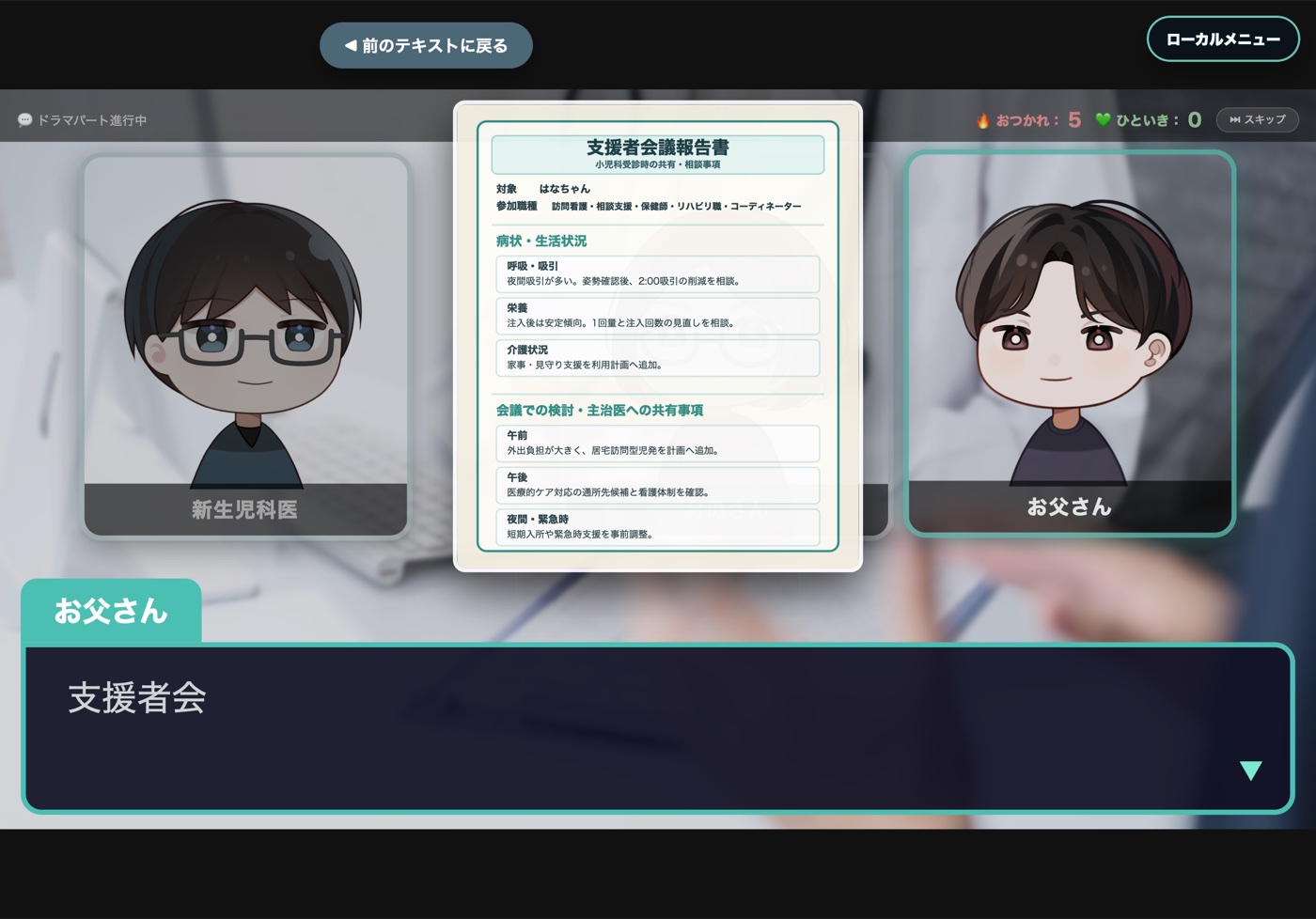
Review the family's circumstances and points for discussion, then plan the next steps together.
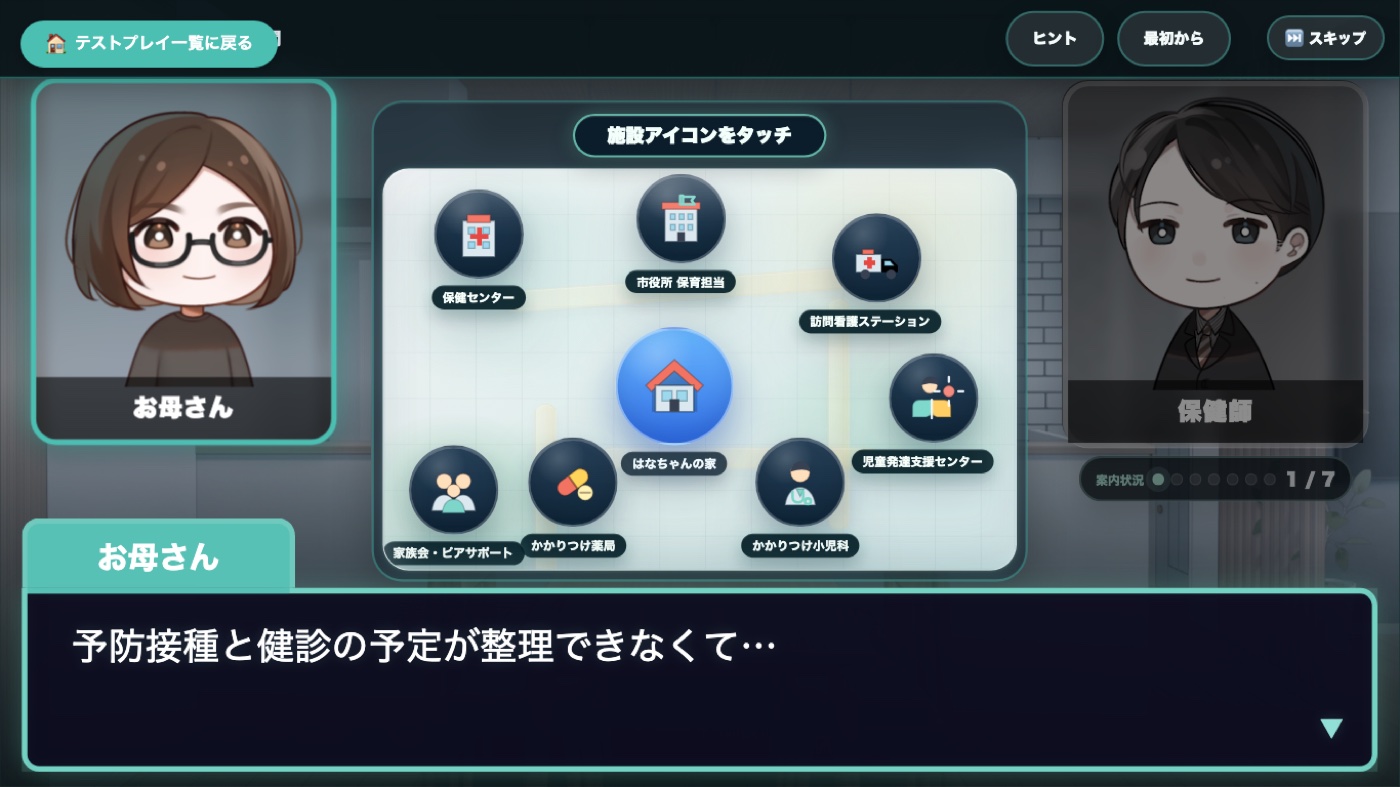
Identify local resources and places the family can turn to, and consider ways to prevent isolation.
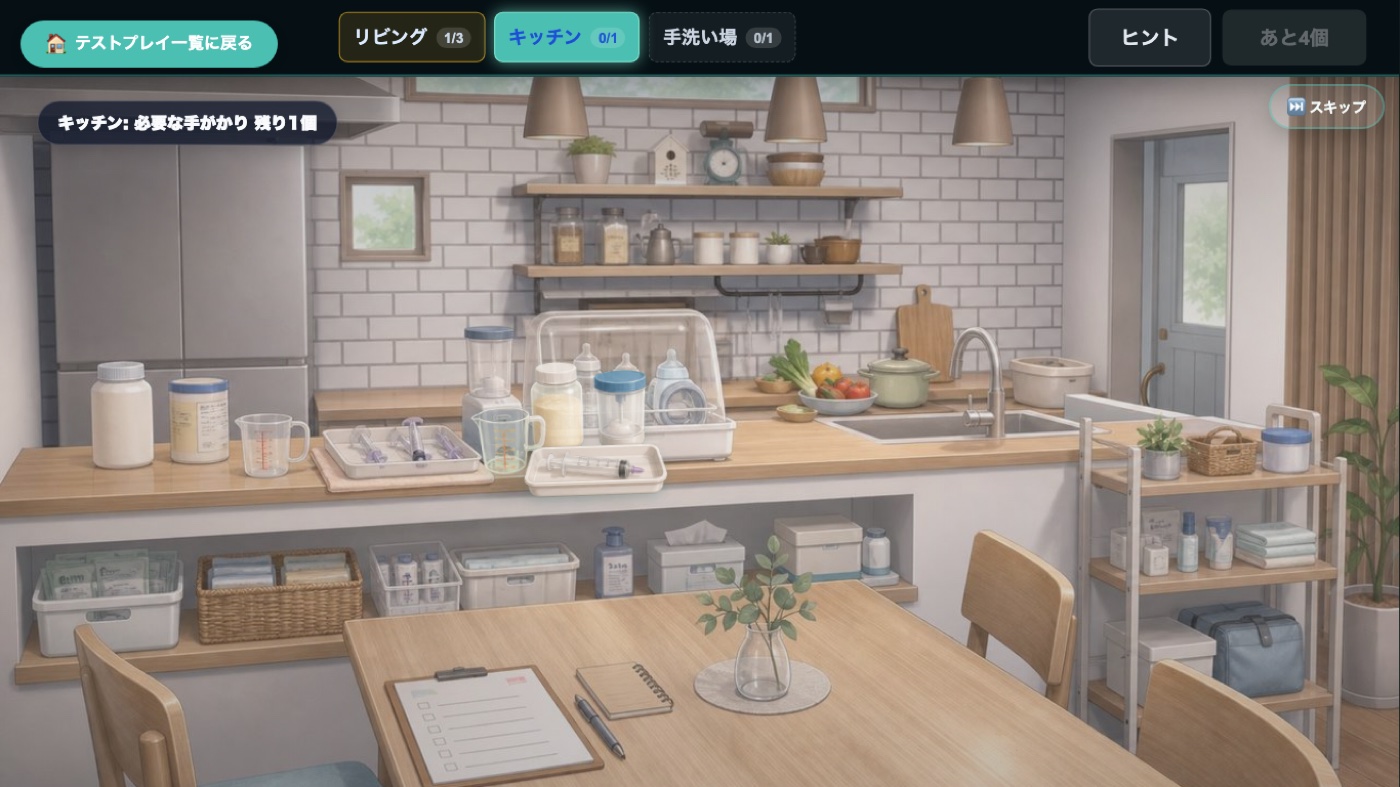
Listen carefully to the family's difficulties at home and plan the support they need.
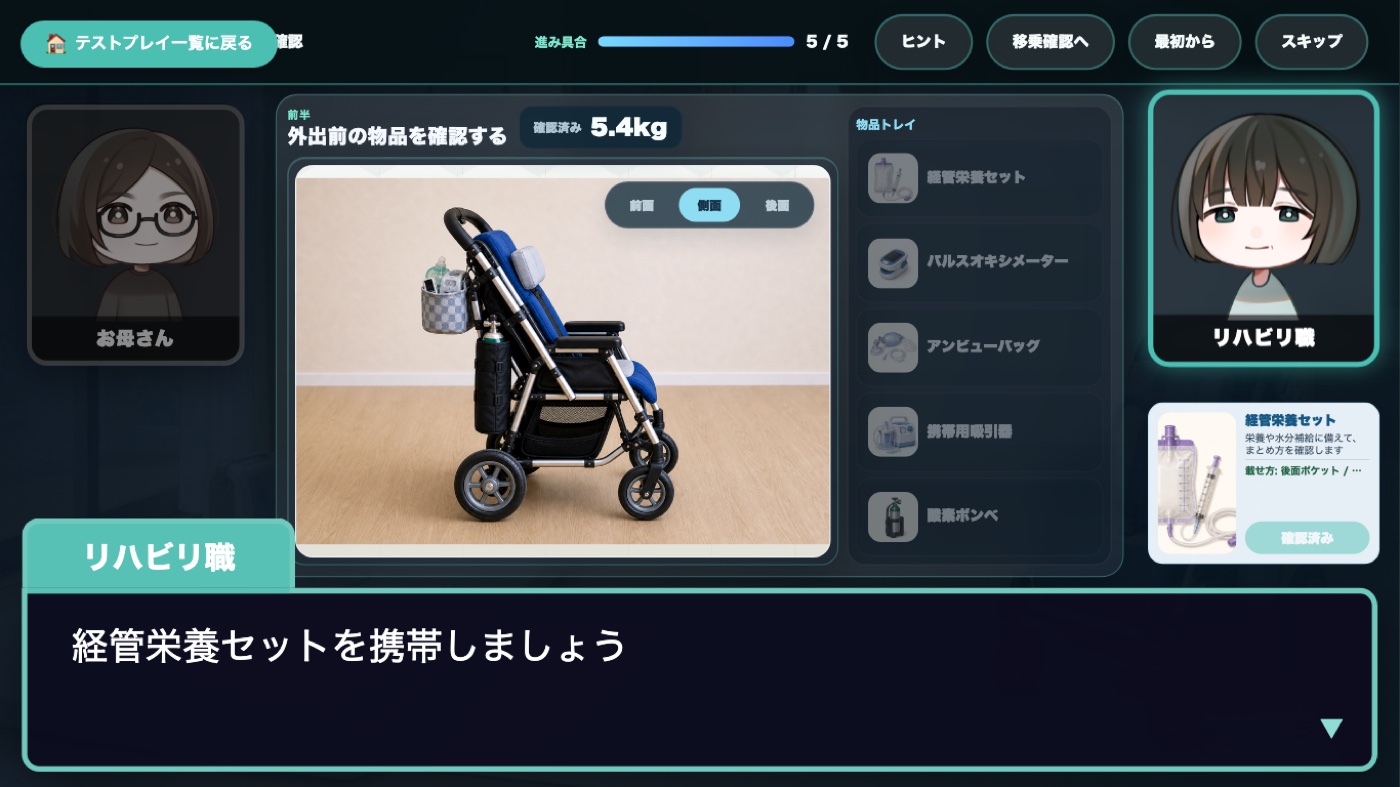
Review the transfer process and items to bring, and explore practical ways to help the family go out.
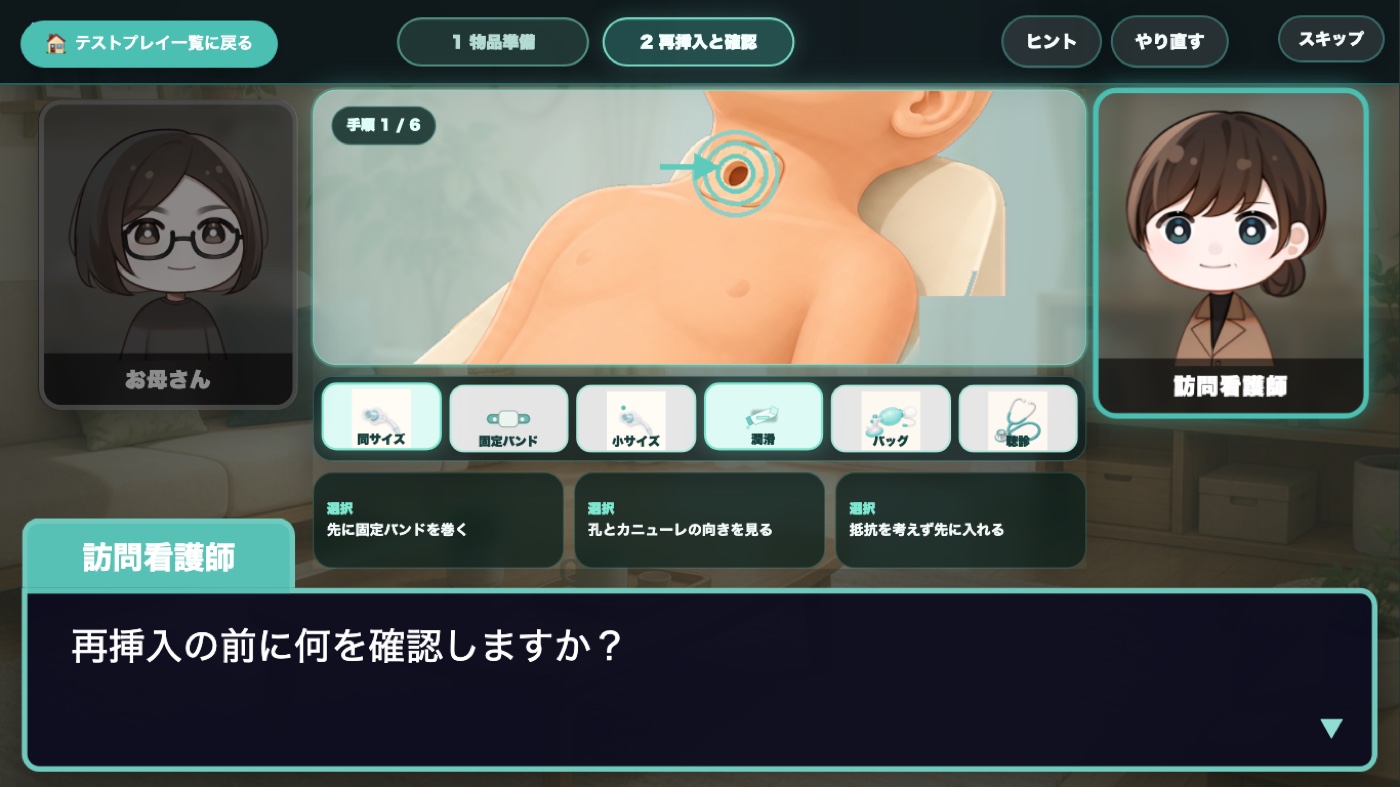
Use a simulator to review decisions and procedures relevant to care, including emergency situations.
Each scenario offers a different way to learn: discussion, choices, arranging items or simulation.
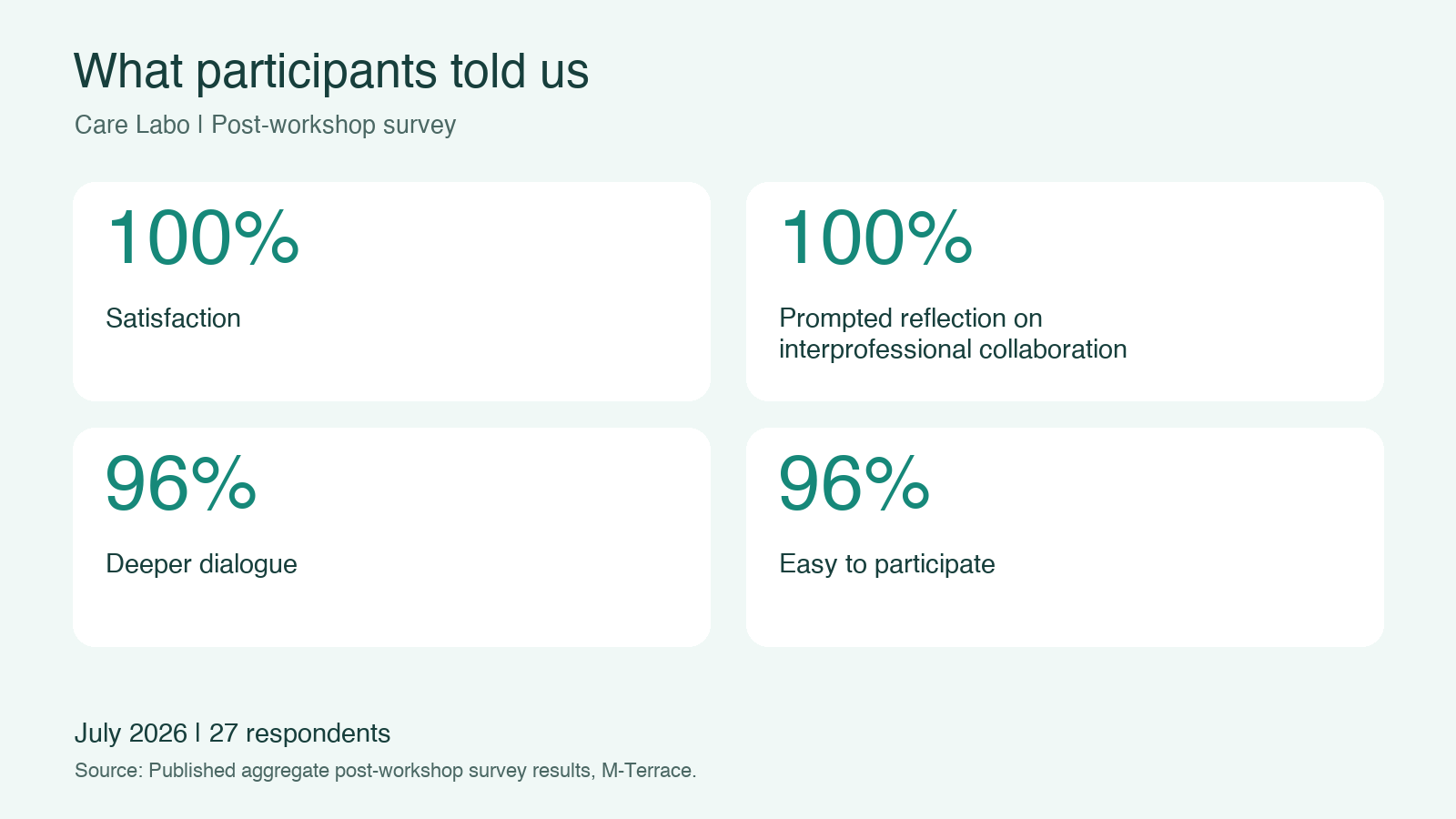
In a post-workshop survey conducted in July 2026 (27 respondents), participants particularly valued interprofessional dialogue and learning to understand family life as a support team.
Source: Post-workshop survey, July 2026; 27 respondents.
Look beyond medical care to consider how support fits into a family's day and month.
Use tokens and events to recognise changes in the family's burden and available capacity.
Combine different areas of expertise and discuss who can provide the support the family needs.
Turn insights from reflection into ideas you can use in your everyday work.
Suitable for interprofessional training in healthcare, social care, local government and education for those supporting children with ongoing medical care needs, as well as introductory training in home-based support for children.
With around 5–8 participants per team, we adapt the content, materials and group composition to your learning goals and available time.
You are welcome to get in touch even if your audience or training goals are still taking shape.